
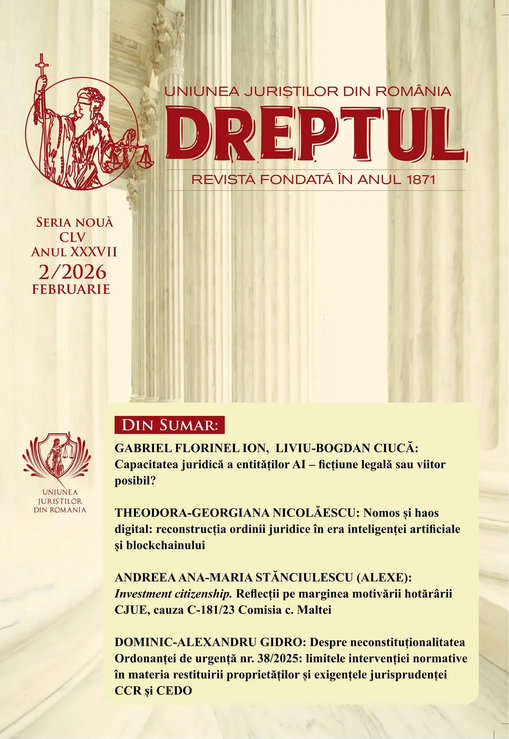
Descriere
This research analyzes the possibility of recognizing the legal capacity of artificial intelligence entities in the context of contemporary technological evolution. The study examines the theoretical foundations of legal subjectivity, international regulatory models, and the implications of this recognition for the Romanian legal system. The methodology includes comparative analysis of legal doctrine, study of international legislation, and jurisprudential evaluation. The results indicate that recognizing AI legal capacity represents an inevitable practical necessity with major implications for contemporary civil law architecture. The study proposes a gradual integration model in Romanian law, respecting constitutional principles and national legal traditions.