
Descriere
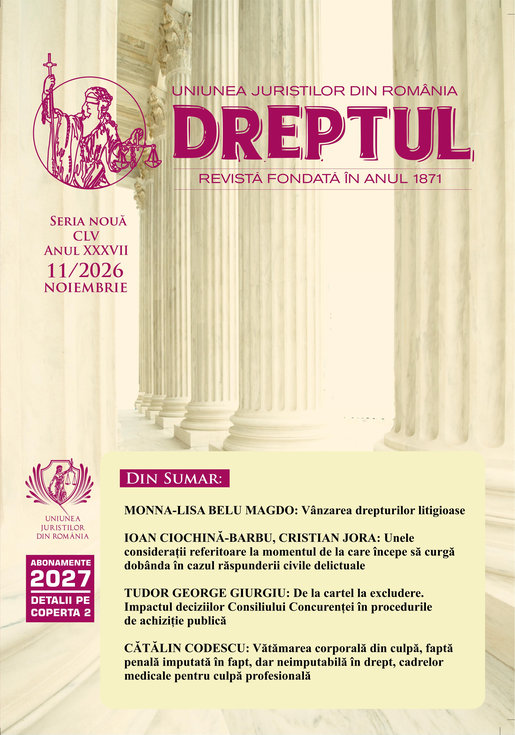
In the first part of the paper, the issues related to the nature of the rights that form the object of the assignment and their characterization as litigious, whenever the substance of their existence, validity and scope is in question, were addressed. The emphasis was placed on the onerous and random nature of the operation, configured by the outcome of the trial, but also on the procedural mechanism of the replacement of the assignor by the assignee, within an ongoing trial in which the substance of the right is in question. The incapacities and exceptions to the purchase of litigious rights were highlighted, emphasizing the aspects related to the extension of the incapacities of purchase, compared to the old regulation, imposed by the prestige due to justice and the aspects that are tangential to the exercise of the functions of this authority.
The issue of the assignment of disputed rights and the exercising limits of the assignor’s right of disposal was correlated with the inalienability of the assets derived from these disputed rights, reference being made to regulations in this regard which aimed at the legal protection of certain categories of persons.
In the analysis of the sale of the disputed rights’ effects, the legal and conventional liability of the assignor for eviction and the contractual risks assumed by the assignee, as a creditor of the obligation to receive the property, the object of the dispute, were examined. In particular, the significance of the dispute’s existence at the time of the sale of the disputed rights was treated, as a condition of this operation.
As for the litigious withdrawal, it was analyzed in the sphere of transitional law, with reference to art. 124 of Law no. 71/2011. The exclusive right of the defendant with a potestative character to take over the assigned right was emphasized, resorting in case of refusal of the assignee to the real offer followed by recording the amounts related to the price with which the assignee purchased the right, the expenses related to the purchase of the disputed right and the interests.
From a procedural point of view, the contested withdrawal may be invoked by a notification communicated to the assignee, during the trial or before the court, at any time during the litigation, by the defendant with full capacity to exercise, or by the legal or conventional representative, if the latter holds a special power of attorney, since the withdrawal operation is an act of disposition. From the perspective of substantive law, the contested withdrawal is a potestative right, extinctively not subject to statutory limitation, which can be invoked by main or exceptional means.