
Descriere
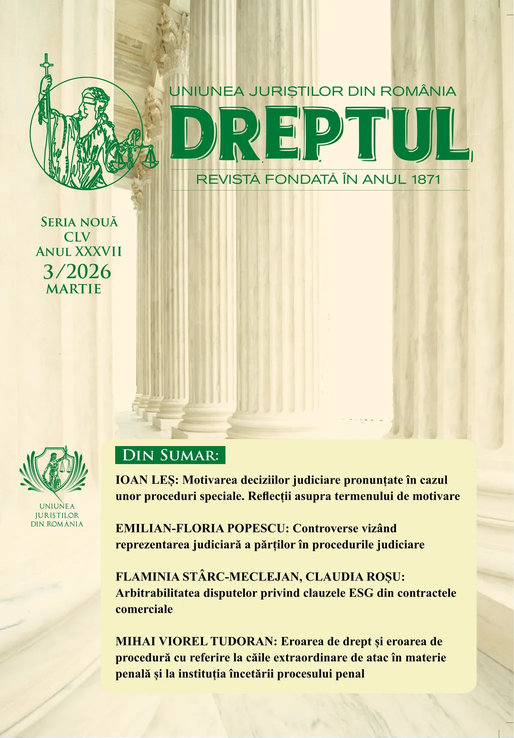
The article analyses arbitration as a private, alternative, and flexible jurisdiction, highlighting its applicability to modern commercial disputes, including those arising from ESG (Environmental, Social, Governance) clauses, which have become legal obligations following new European directives. It presents arguments supporting the arbitrability of such clauses – particularly their contractual and patrimonial nature, party autonomy, and the need for specialized expertise – as well as arguments against arbitrability, derived from their public-interest dimension, the mandatory nature of certain ESG norms, the need for transparency, and the risk of fragmented standards. The article proposes a balanced solution, advocating for conditional arbitrability, where disputes with patrimonial effects may be settled by arbitration, while those involving mandatory norms or collective interests remain under the jurisdiction of state courts. Finally, it argues that arbitration must adapt to the specificities of ESG by drafting appropriate contractual clauses, ensuring arbitrator specialisation, and introducing controlled transparency in order to guarantee coherence and legitimacy in resolving such disputes.
